
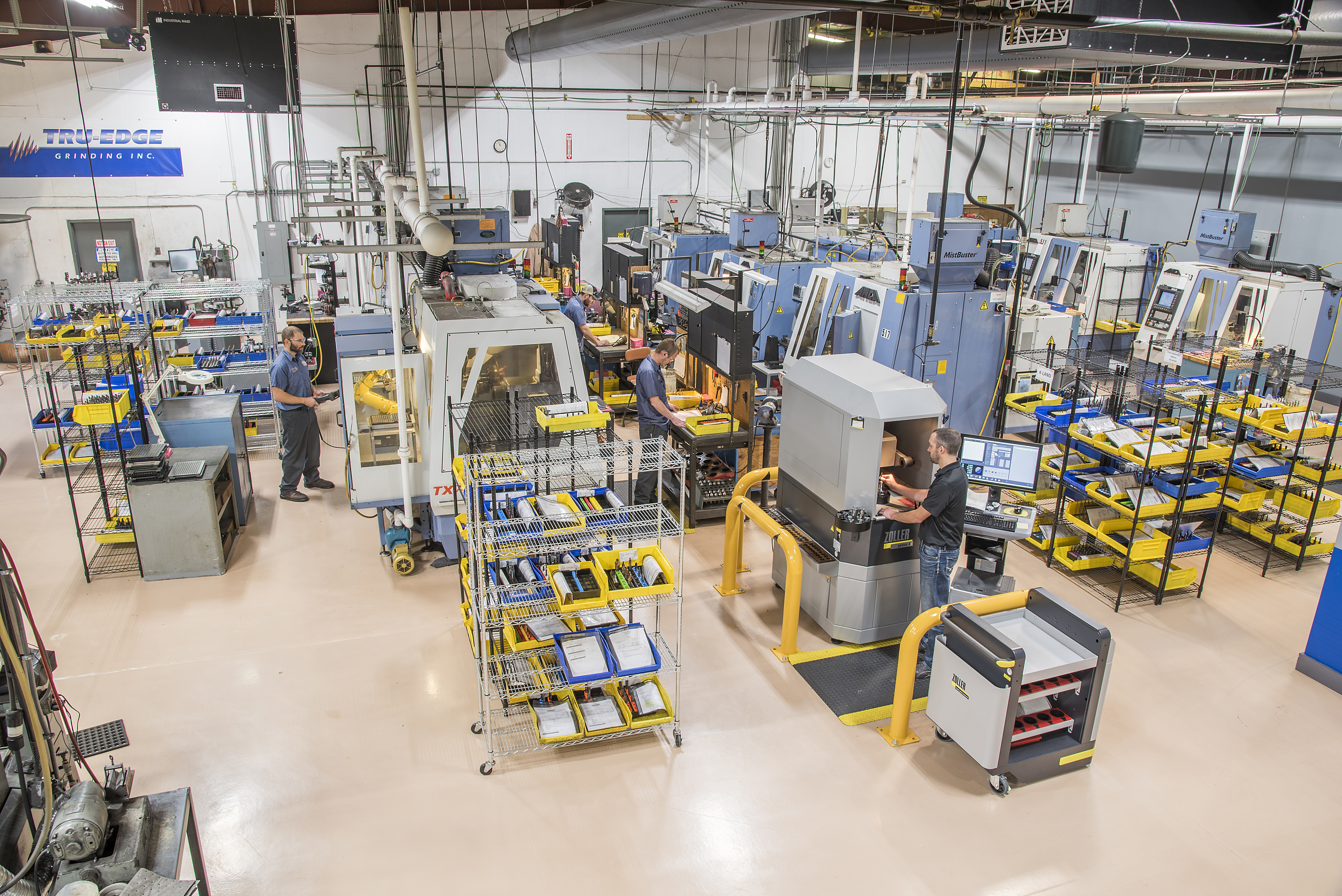
The Bottleneck is Often Hiding in the Tooling Sequence
On a legacy manufacturing line, the constraint is not always the machine, the operator, or the fixture. Often, the bottleneck lies in the sequence of tools required to produce a critical feature. A hole may require a drill, a step drill, a chamfer tool, a reamer, a deburring operation, and a finishing pass. A pocket may require multiple end mills, a long-reach tool, a cleanup tool, and secondary inspection, as chips, heat, or burrs are difficult to control. The process may get the part made, but it does so by accepting extra tool changes, extra offsets, more opportunities for variation, and longer cycle time than the part should require.
This is where the fun begins: Finding the right combo tools. No one single manufacturer has the perfect tool(s) for all these operations into one catalog. It’s “special”. It’s “standard” to you, but it’s “custom” to all others.
That is where TE+ fits. TE+ is built around the idea that manufacturers should not have to choose between a limited local responsiveness and a broader global tooling provider. The challenge might sit inside a Midwest production cell, a Northeast aerospace program, a Southwest machining operation, or a national multi-site manufacturing footprint. The answer still has to arrive close to the spindle. TE+ brings together regional expertise and national coverage across custom tool design, production of solid carbide round tools, reconditioning, repair, coating, application support, and tool life management, right here in the USA all under a virtual roof of 4 locations.
The goal is simple: help manufacturers remove friction from the tooling process so machines can keep running, parts can stay consistent, and legacy processes can be modernized without assuming that every bottleneck requires new capital equipment. In many cases, the best improvement begins with a better question: which steps exist because the tooling was never designed around the feature?
Why a Custom-Designed Round Tool Can Eliminate the Bottleneck
A custom-designed solid carbide round tool can eliminate a bottleneck by collapsing multiple operations into a single controlled cutting event. Instead of asking a sequence of standard tools to collectively solve a single complex feature, the tool can be designed around the actual geometry, material, machine, tolerance requirements, and production goals.
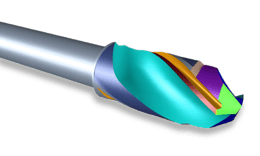 For hole-making, that might mean combining drilling, chamfering, countersinking, step geometry, flat-bottom creation, and form features into a single tool. For endmilling, it might mean designing the tool around reach, radial engagement, corner strength, flute volume, chip formation, or finishing requirements. In both cases, the custom tool is not simply a special cutter. It is a process strategy.
When the right operations are combined, the improvement compounds. The cell reduces tool changes. Offsets become easier to manage. The operator has fewer interruptions. The feature is created with fewer handoffs. The relationship between critical dimensions can improve because the tool is controlling more of the geometry in a single setup. The process also becomes easier to document, repeat, troubleshoot, and recondition because the tool was engineered for a defined role rather than adapted from a catalog compromise.
This does not mean every operation should be combined. A custom tool only creates value when it removes unnecessary complexity without creating a new failure mode. That is why TE+ considers the entire process: tool geometry, carbide grade, coating, edge prep, speeds and feeds, toolpath strategy, inspection requirements, regrind path, and production volume. The strongest answer is not always the most aggressive tool. It is the tool that creates the most stable process.
Chip Evacuation: Where Flute Count and Geometry Make or Break the Process
In deep cavities, long-reach applications, and high-aspect-ratio holes, chip evacuation is often the difference between a reliable operation and a stalled one. Chips that cannot leave the cut become heat, recutting, finish problems, edge damage, tool breakage, and unplanned downtime. For manufacturers trying to eliminate a bottleneck, chip control must be built into the tool from the beginning.
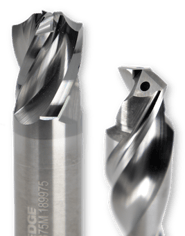 Flute count is one of the first levers. More flutes can improve productivity and finish when the chip volume is manageable, but they reduce flute space. In deep cavities or gummy materials, too many flutes can pack chips and create heat. Fewer flutes can create more room for evacuation and coolant access, but may require adjusted chip load, engagement, and toolpath strategy to maintain productivity and finish. The right answer depends on the material, depth, coolant access, tool diameter, feature geometry, and whether the tool is roughing, finishing, drilling, interpolating, or combining multiple cutting actions.
Geometry goes beyond flute count. Helix angle, flute depth, core thickness, gash design, margin width, corner radius, point geometry, relief, edge prep, and coolant-through capability all affect how the tool forms and moves chips. A custom tool can be tuned to create chips that the process can actually evacuate. In practice, this can mean less pecking, fewer dwell marks, more predictable load, less recutting, and less time lost clearing chips from hard-to-reach features.
Toolpaths that Prevent Heat Buildup in Hard-to-Reach Features
Even a well-designed tool can fail if the cutting strategy traps heat. Hard-to-reach features are especially vulnerable because reach, chip evacuation, coolant access, and rigidity are already compromised. The right toolpath keeps engagement predictable and prevents the tool from repeatedly overloading.
Adaptive clearing, trochoidal milling, constant-engagement toolpaths, high-efficiency milling, helical interpolation, ramping strategies, and controlled stepdowns can all help manage heat. These approaches reduce abrupt load spikes, maintain more consistent chip thickness, and help prevent rubbing. In difficult pockets and deep features, the objective is not only to remove material quickly. The objective is to remove material without creating thermal damage, burrs, finish instability, premature wear, or dimensional drift.
This is where tooling and programming need to meet. A custom solid carbide round tool can be designed with the intended toolpath in mind, and the toolpath can be adjusted to match the tool’s actual flute count, geometry, edge condition, and engagement window. When those decisions are made together, the process is less likely to rely on conservative workarounds or trial-and-error adjustments at the machine.
Why Matching the Carbide Grade is Crucial
Carbide grade selection is not a generic purchasing decision. It determines the balance between hardness, toughness, thermal resistance, wear resistance, and edge integrity. A grade that performs well in aluminum may not hold up in hardened steel, stainless, titanium, Inconel, cast iron, composites, or interrupted cuts. A grade that resists wear may be too brittle for the application. A tougher grade may survive interruption but lose productivity if wear accelerates too quickly.
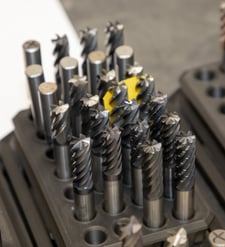 The grade also has to match the coating, edge prep, machine condition, and regrind expectations. In aerospace and defense work, documentation and repeatability may be as important as throughput. In high-volume production, a predictable wear-and-reconditioning strategy may drive the lowest cost per part. In regional job shop environments, flexibility and application support may matter because materials and part families change frequently. TE+ combines these needs under one platform while still keeping support close to the manufacturer’s actual work.
A custom round tool becomes most valuable when grade, coating, and geometry are selected as a system. That system can be optimized for abrasion resistance, heat resistance, toughness, lubricity, edge strength, chip formation, finish, or tool life. The more demanding the feature, the more important it becomes to avoid treating carbide grade as an afterthought.
How Speeds and Feeds Should be Adjusted for Solid Round Tools
Once a round tool is custom-designed, speeds and feeds should follow the tool and the process, not a generic catalog range. The starting point is surface footage, chip load per tooth, radial engagement, axial depth, machine rigidity, holder condition, and desired chip formation. From there, the process should be tuned by watching load, sound, chip color, chip shape, finish, dimensional control, burr formation, and wear pattern.
For solid carbide round tools, conservative settings can be just as problematic as aggressive settings. Underfeeding can create rubbing and heat. Overfeeding can overload the edge. Excessive speed can accelerate wear, especially in heat-resistant alloys. Insufficient speed can hurt chip formation or finish. Deep features may require adjusted pecking, coolant-through pressure, ramp rates, or engagement limits. Endmilling may require different settings for slotting, profiling, finishing, helical interpolation, and high-efficiency strategies.
The practical recommendation is to treat speeds and feeds as part of the engineered solution. TE+ can support the tool, but the highest-value outcome comes when the tool design, toolpath, setup, machine condition, and reconditioning plan all point toward the same production objective.
Quality Improvements can be Bigger than the Cycle-Time Savings
Cycle time reduction is often the easiest benefit to see, but quality improvement may create the larger operational win. When one custom tool replaces a fragile sequence, the process can reduce variation between tools, lower the number of offsets, improve feature-to-feature relationships, reduce burrs, and stabilize surface finish. Fewer tool changes can mean fewer opportunities for runout, length error, incorrect offsets, operator intervention, and dimensional drift.
In critical manufacturing, the quality gain may also include improved documentation, clearer repeatability, and reduced inspection risk. For production teams, it may mean less rework, less scrap, fewer stoppages, and a more predictable cost per part. For maintenance and procurement, it can mean a simplified tool list, a clearer regrind path, and fewer emergency workarounds when tools wear out or break unexpectedly.
This is why bottleneck elimination should not be measured only at the machine control. The better measure is total process improvement: cycle time, uptime, tool count, tool life, regrindability, scrap, rework, finish, burr control, inspection confidence, and supply chain reliability.
Regional Support with National Coverage
The TE+ value is not only that custom tooling capability exists. It is that manufacturers can access it through a connected U.S. platform designed around proximity, responsiveness, and depth of capability.
Tru-Edge brings Simplify Tooling thinking, custom round-tool engineering, manufacturing, coating, regrinding, and tool-life management.
ASG brings deep support for aerospace, defense, documentation-driven work, custom grinding, regrinding, coating, and application support.
PTG brings regional precision tooling, CNC grinding, PVD coating, regrinding, and production-focused application consulting.
MetalCut keeps your production moving with precision indexable tool repair, indexable tool rebuilding, tool reconditioning, application-specific design, and new-build manufacturing of indexable cutting tools.
Together under TE+, these capabilities create a national platform that still feels close to the work.
That matters because bottlenecks are local. They happen at a machine, on a shift, in a feature, with a specific material and a specific tolerance requirement. Solving them requires people who understand the application, the part, the machine, and the production pressure. TE+ gives manufacturers access to that regional support while backing it with broader engineering, manufacturing, reconditioning, coating, and tool management resources.
When the bottleneck is a tooling sequence, the answer is not always more equipment, more labor, or more inventory. Sometimes the answer is one better-designed tool, supported by the right geometry, carbide grade, coating, toolpath, speeds, feeds, and lifecycle plan. TE+ helps manufacturers find that answer without being too far from the production floor.
If one feature is slowing the line, expanding the tool list, driving rework, or forcing workarounds, it may be time to look at the process through the tool. TE+ is built to help manufacturers do exactly that: simplify the cut, reduce bottlenecks, and keep production moving with regional support and national coverage, right here in the USA.